Restaurant Health Inspection Checklist: Plumbing Issues That Can Fail You (San Diego)
If you’re a restaurant owner in San Diego, you already know health inspections can feel stressful — especially when the inspector starts looking at sinks, drains, grease lines, and floor drains.
The truth is: many “health inspection failures” aren’t about food. They’re about plumbing problems that create standing water, odors, backups, and contamination risks.
This restaurant health inspection checklist is focused specifically on plumbing compliance — the items that most often lead to re-inspections, violations, and shutdown risk.
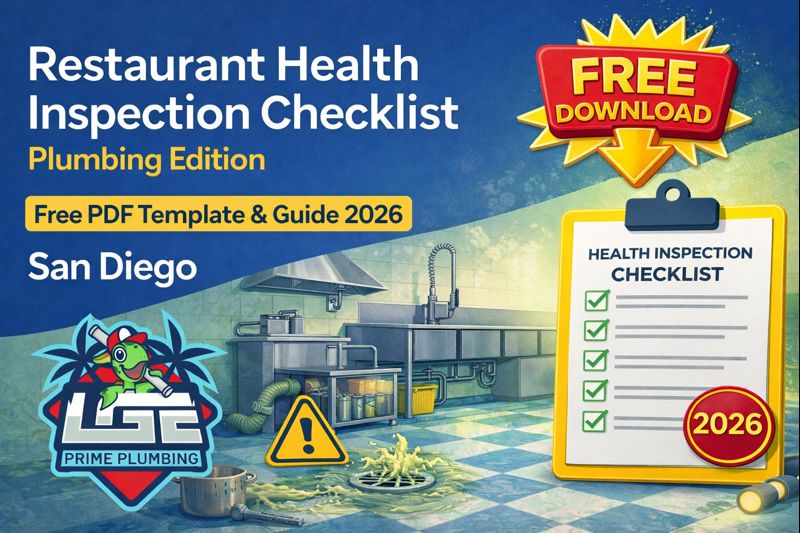
Restaurant Health Inspection Checklist (Plumbing Compliance)
Use this checklist before an inspection, after a warning, or anytime you’ve had recurring drain issues. If you want, our team can also walk your kitchen with you and help you address issues fast.
📥 Free Download: Restaurant Health Inspection Checklist
1) No Floor Drain Backups (Standing Water Is a Big Red Flag)
Floor drains are one of the first places inspectors notice problems because backups create unsanitary conditions quickly.
- No standing water around floor drains
- No slow draining in prep areas or dish areas
- No overflow signs (water stains, grime rings, recurring puddles)
If you’ve had even one floor drain backup during service, that’s usually a sign your line needs a deeper cleaning than a basic snake.
Recommended fix: commercial hydro jetting in San Diego to fully remove grease and buildup.
2) Grease Buildup Under Control (FOG Problems = Fast Violations)
Grease is one of the biggest causes of restaurant plumbing shutdowns. FOG (fats, oils, grease) sticks to pipe walls and eventually causes blockages and overflows.
- Grease lines flowing normally (no frequent clogs)
- No grease smells coming from drains
- No gurgling sounds or “burping” floor drains
- No recurring backups during rush hours
If your kitchen smells “sewer-ish” even after cleaning, that often means grease buildup is sitting in the line.
3) 3-Compartment Sink Drains Properly
Your 3-compartment sink is a major inspection focus because it’s tied to sanitation and food safety processes.
- Sink drains quickly (no pooling water)
- No leaks underneath
- No loose trap connections
- No water damage or mold signs in the cabinet area
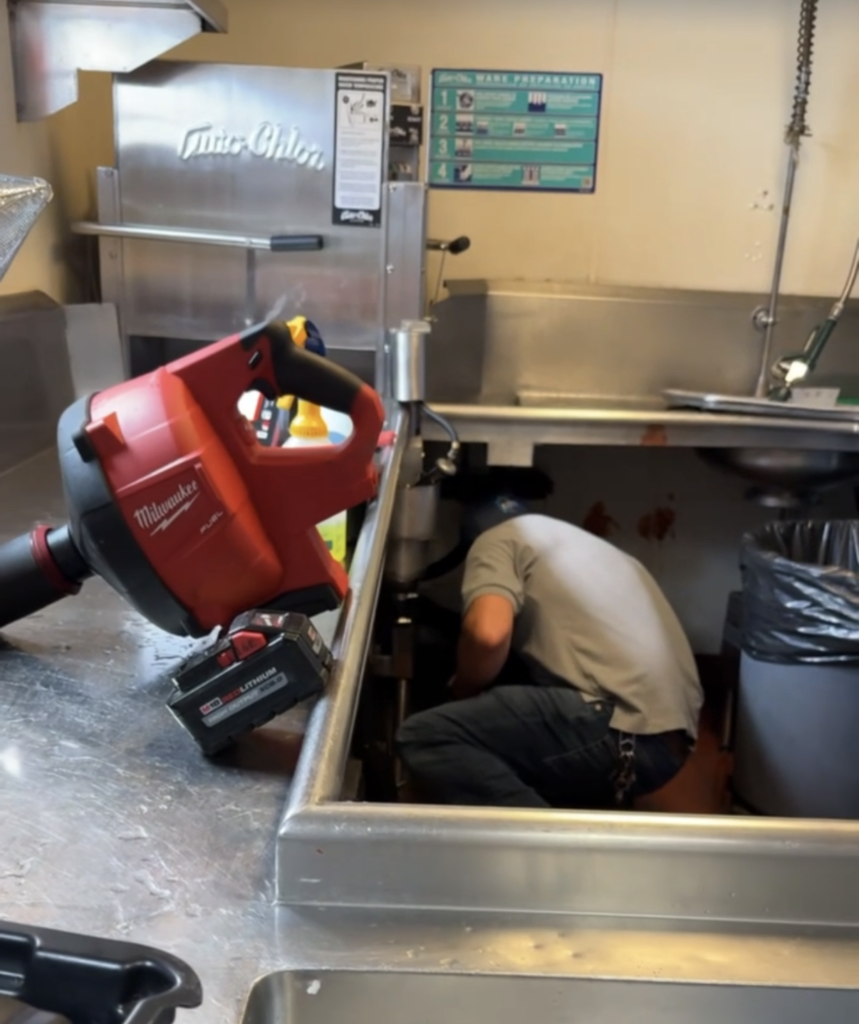
A slow or clogged 3-compartment sink drain often points to grease buildup in the line — not just a small blockage.
4) Hand Sink Is Fully Functional (Hot Water + Drain Flow)
Hand sinks must be usable at all times. Inspectors commonly check these because they’re required for hygiene compliance.
- Hot and cold water works
- Drain flows properly (no slow draining)
- No faucet leaks
- No clogged aerators reducing flow
If your hand sink is slow draining, it can be a quick fix — but it’s not something you want discovered during an inspection.
5) No Leaking Pipes (Leaks Can Trigger Sanitation Concerns)
Even small leaks under sinks can create standing water, attract pests, and cause sanitation issues.
- No dripping supply lines
- No leaking angle stops
- No active leaks under prep sinks
- No moisture buildup near walls or floors
Leaks also lead to cabinet damage and mold, which can create bigger compliance issues later.
6) No Sewer Odors (Odors Usually Mean a Drain Problem)
Sewer smells are not just unpleasant — they often signal a plumbing issue that could become an inspection problem fast.
- No sewer smell near floor drains
- No sewer smell near dishwashing area
- No sewer smell near bar sinks
Common causes: grease buildup, dry traps, blocked venting, or a partial line obstruction.
7) Restrooms Draining Properly (Toilets + Sinks + Floor Drains)
Restroom plumbing issues can become customer complaints quickly — and they can also raise red flags during inspections.
- Toilets flush normally (no slow flush, no overflow)
- Restroom sinks drain properly
- No sewage odor
- No recurring clogs
8) Hot Water Supply Is Reliable (Restaurants Need Consistent Hot Water)
Restaurants rely heavily on hot water for sanitation. If your water heater is undersized or failing, it can cause operational problems fast.
- Hot water available during peak hours
- No temperature swings
- No leaking water heater
- No rust-colored water
If you’re running out of hot water during a rush, your system may need service, repair, or replacement.
9) Backflow Prevention (If Required, Don’t Ignore This)
Some restaurants require backflow prevention depending on the building setup and local requirements.
- Backflow device installed where required
- No leaks at the assembly
- No water pressure issues
If you’re unsure whether your restaurant needs backflow prevention service, we can help you identify what’s installed and what’s required.
10) Emergency Shut Down Risks (Avoid the “Friday Night Backup”)
The most expensive restaurant plumbing problem is the one that happens during service.
- No recurring clogs
- No “almost backing up” drains
- No history of grease line backups
- No floor drain overflows during rush
If you’ve had one close call, it’s usually a warning sign your line needs professional cleaning before it becomes a shutdown.
Quick Restaurant Health Inspection Checklist
If you want a simple “yes/no” version, use this quick Restaurant Health Inspection Checklist:
- ☐ Floor drains clear (no standing water)
- ☐ No slow drains in dish or prep areas
- ☐ No sewer smell anywhere in kitchen
- ☐ 3-compartment sink drains properly
- ☐ Hand sink hot/cold works + drains properly
- ☐ No active leaks under sinks
- ☐ Restrooms flushing/draining properly
- ☐ Hot water is reliable during peak hours
- ☐ Grease line not clogging frequently
- ☐ No history of recurring backups
What If Your Restaurant Already Failed a Health Inspection?
If you were flagged for plumbing-related issues, don’t panic — most restaurant plumbing compliance problems are fixable quickly if handled correctly.
Common plumbing-related reasons restaurants fail inspections include:
- Backed up floor drains
- Standing water in kitchen areas
- Sewer odors
- Slow drains at sinks
- Leaks causing unsanitary conditions
The fastest way to prevent repeat violations is to fix the root issue — not just temporarily clear the clog.
When Restaurants Need Hydro Jetting (Not Just Snaking)
A drain snake can sometimes poke through a clog, but restaurants often need more than that because grease coats the pipe walls.
Hydro jetting uses high-pressure water to clean the full inside of the pipe, helping remove:
- Grease buildup
- Food debris
- Sludge and heavy buildup
- Recurring blockages
If you’re dealing with repeated backups, hydro jetting is usually the best way to get ahead of compliance issues.
Learn more about Hydro Jetting in San Diego
FAQs About Restaurant Health Inspection Plumbing Compliance
Need Help Passing a Restaurant Inspection? Call LGE Prime Plumbing
If your restaurant is dealing with slow drains, backups, sewer smells, or compliance issues, we can help. LGE Prime Plumbing provides professional commercial plumbing support across San Diego — including hydro jetting, camera inspections, grease line cleaning, and repairs.
👉 Schedule Restaurant Plumbing Service in San Diego
For official inspection and sanitation guidelines, visit the San Diego County Department of Environmental Health (DEH).