
Slab leak signs can be easy to shrug off at first — a warm spot on the floor, a small crack in the tile, or a water bill that’s just a little higher than normal. But under your concrete foundation, even a small leak can quietly cause serious damage to your home, flooring, and foundation.
At LGE Prime Plumbing, we help San Diego homeowners spot slab leak signs early, confirm what’s really going on, and fix the problem before it becomes a major structural issue. This guide walks you through the most common warning signs, what they mean, and what to do next if you suspect a slab leak in your home.
What Is a Slab Leak?
A slab leak happens when a water line running under your home’s concrete foundation develops a crack, hole, or failed fitting. Instead of flowing inside the pipe, water slowly leaks into the soil or up through the slab — often for weeks or months before obvious damage appears.
In many San Diego homes, older copper lines under the slab are under constant pressure. Over time, shifting soil, corrosion, or poor original installation can cause leaks that stay hidden until you start noticing subtle slab leak signs inside the house.
Most Common Slab Leak Signs in San Diego Homes
If you’re wondering whether that warm tile or random damp spot is something to worry about, here are the most common slab leak signs we see in San Diego homes:
- Unexplained warm spots on the floor: If a section of tile, wood, or carpet consistently feels warm — especially along a hallway or near a bathroom — it can indicate a hot water line leaking under the slab.
- Sudden increase in your water bill: If your usage habits haven’t changed but your bill has jumped, hidden leaks under the foundation are a common cause.
- Sounds of running water when everything is off: If you hear water moving through pipes even when no fixtures are on, that’s a classic slab leak sign.
- Cracks in flooring, tile, or walls: As water washes out soil beneath the slab, your foundation can shift, leading to new or widening cracks.
- Hot spots plus high water usage: A combination of warm flooring and unexplained water usage is one of the strongest slab leak signs to take seriously.
- Musty odors or dampness: Moisture trapped under flooring can cause mildew smells, buckling wood, or bubbling paint at the base of walls.
One sign on its own may not confirm a leak, but if you’re seeing two or more, it’s time to have your plumbing checked by a professional.
Early Slab Leak Signs vs. Late-Stage Damage
The sooner you act on slab leak signs, the easier and more affordable the repair usually is. Here’s how early and late-stage symptoms often compare:
Early slab leak signs
- Slightly higher water bills over a few months
- Small warm area on the floor that comes and goes
- Faint sound of water when the home is quiet
- Minor hairline cracks in grout or tile
Late-stage slab leak signs
- Consistently high water bills, even after you try to conserve
- Large warm or damp areas on the floor
- Visible standing water, moisture at baseboards, or wet carpet
- Noticeable foundation cracks or doors that stop closing properly
- Mold growth, musty smells, or damaged flooring
By the time you see obvious water damage, that slab leak has usually been active for quite a while. Acting on early slab leak signs can save you from major restoration and structural repairs later.
What Causes Slab Leaks in San Diego Homes?
Understanding why slab leaks happen can help you take the signs more seriously. Some of the most common causes include:
- Soil movement and settling: Changes in the soil beneath your home can put stress on pipes and joints.
- Corrosion of older copper pipes: Over time, water chemistry and contact with concrete can cause pinhole leaks.
- Poor original installation: Pipes that were kinked, bent, or not properly supported may fail years down the line.
- High water pressure: Excessive pressure accelerates wear and can turn tiny pinholes into major leaks.
If your home is older, has experienced previous leaks, or you’ve already had plumbing repairs under the slab, paying attention to slab leak signs is especially important.
What to Do If You Notice Slab Leak Signs
If you’re seeing multiple slab leak signs, here are some smart steps to take:
- Check your water meter: Turn off all water inside the home, then see if the meter is still spinning. If it is, water is going somewhere it shouldn’t.
- Note where you feel warmth or dampness: Make a mental map or take photos of hot spots, cracks, or moisture — this can help your plumber narrow down the problem.
- Avoid tearing up floors yourself: Guessing and breaking concrete without a plan often leads to bigger repairs and higher costs.
- Call a slab leak specialist: A licensed plumber with proper leak detection tools can confirm whether those slab leak signs are the real thing.
At LGE Prime Plumbing, we use professional leak detection equipment to confirm whether you truly have a slab leak and where it’s coming from — before any flooring is opened.
How Professionals Confirm Slab Leak Signs
When you call us out for suspected slab leak signs, we don’t start with jackhammers. We start with diagnostics. Our slab leak detection process may include:
- Acoustic listening devices: Sensitive equipment helps us “hear” water escaping from pressurized lines under the slab.
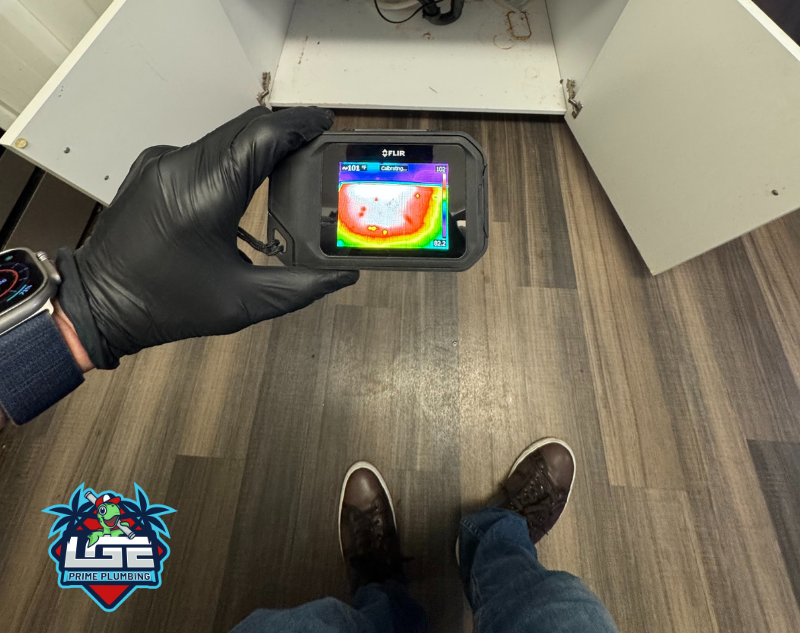
- Thermal imaging: Infrared cameras can reveal hot water paths beneath tile, concrete, or wood flooring.
- Pressure testing: We isolate and test specific lines to see where pressure drops, which indicates a leak.
- Moisture meters: Used to check walls, baseboards, and flooring for hidden dampness.
Once we’ve confirmed the leak location, we’ll walk you through repair options — from targeted spot repairs to rerouting lines away from the slab. You can learn more about our approach on our slab leak repair service page.
Repair Options When Slab Leak Signs Are Confirmed
Not every slab leak is treated the same way. Depending on the age of your plumbing and the location of the leak, common solutions include:
- Direct spot repair: Opening a small section of floor above the leak, repairing or replacing the damaged pipe, and patching the slab.
- Pipe rerouting: Abandoning the leaking line under the slab and running a new line through walls or ceilings to avoid future slab issues.
- Partial or whole-home repipe: If slab leak signs are just one part of ongoing pipe problems, a repipe may be the most cost-effective long-term fix.
Our goal is always to protect your foundation, minimize disruption inside your home, and give you a solution that actually lasts — not just a temporary patch.
When slab leak signs mean it’s time to call right away
Some situations should be treated as urgent. Call a professional immediately if you notice:
- Rapidly rising water bills over one or two cycles
- Floors that feel hot, soggy, or “squishy” underfoot
- Visible water coming through cracks or at baseboards
- Mold smell combined with any of the other slab leak signs
These usually mean the leak has progressed beyond a slow drip — and the longer you wait, the more extensive the damage can become.
Slab Leak Signs FAQs
Helpful Resources
- Slab Leak Repair in San Diego
- Leak Detection Services
- City of San Diego Public Utilities – Water & Sewer
Seeing possible slab leak signs at home? Call LGE Prime Plumbing at (858) 366-8735 or request an inspection online. Our family-owned San Diego team will help you confirm what’s going on and recommend the best way to protect your foundation and your home.